Morphology of Meniscal Tears

Reviewed by Greg Jaroszynski MD, FRCSC | Last updated May 2026

The shape, location, stability, and tissue quality of a meniscal tear influence symptoms and treatment options. These illustrations are simplified educational diagrams.

Vertical longitudinal meniscal tear
Vertical longitudinal tear: a tear running along the length of the meniscus. This pattern may be repairable when traumatic, peripheral, and associated with good tissue quality.
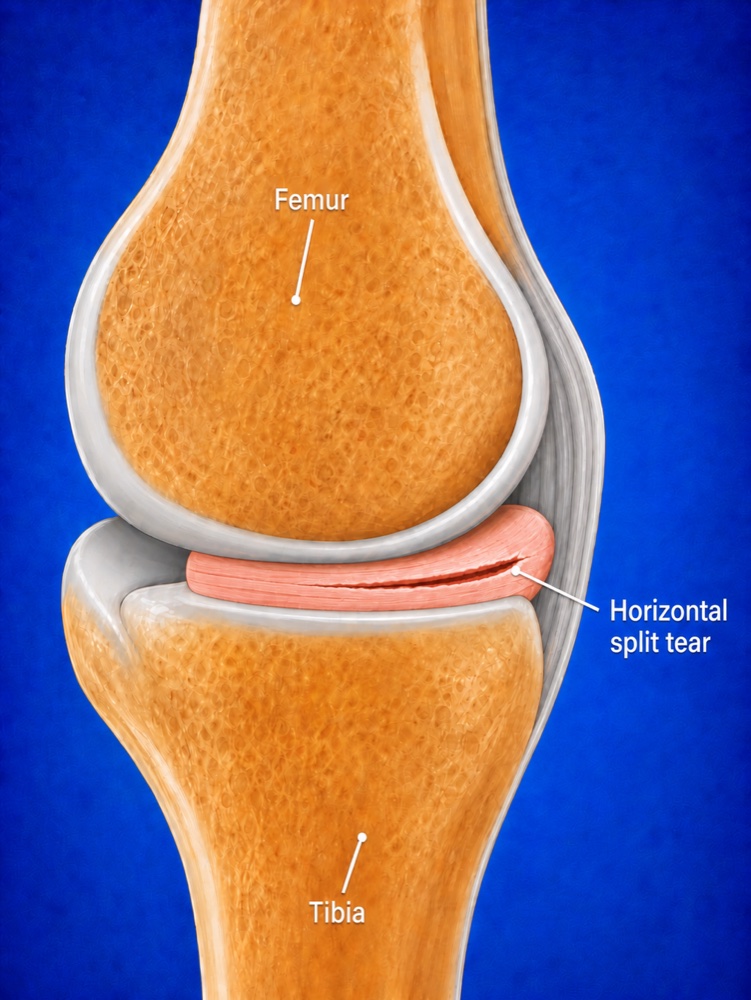
Horizontal cleavage meniscal tear
Horizontal cleavage tear: a split through the meniscus into upper and lower layers, often degenerative and sometimes associated with a meniscal cyst.
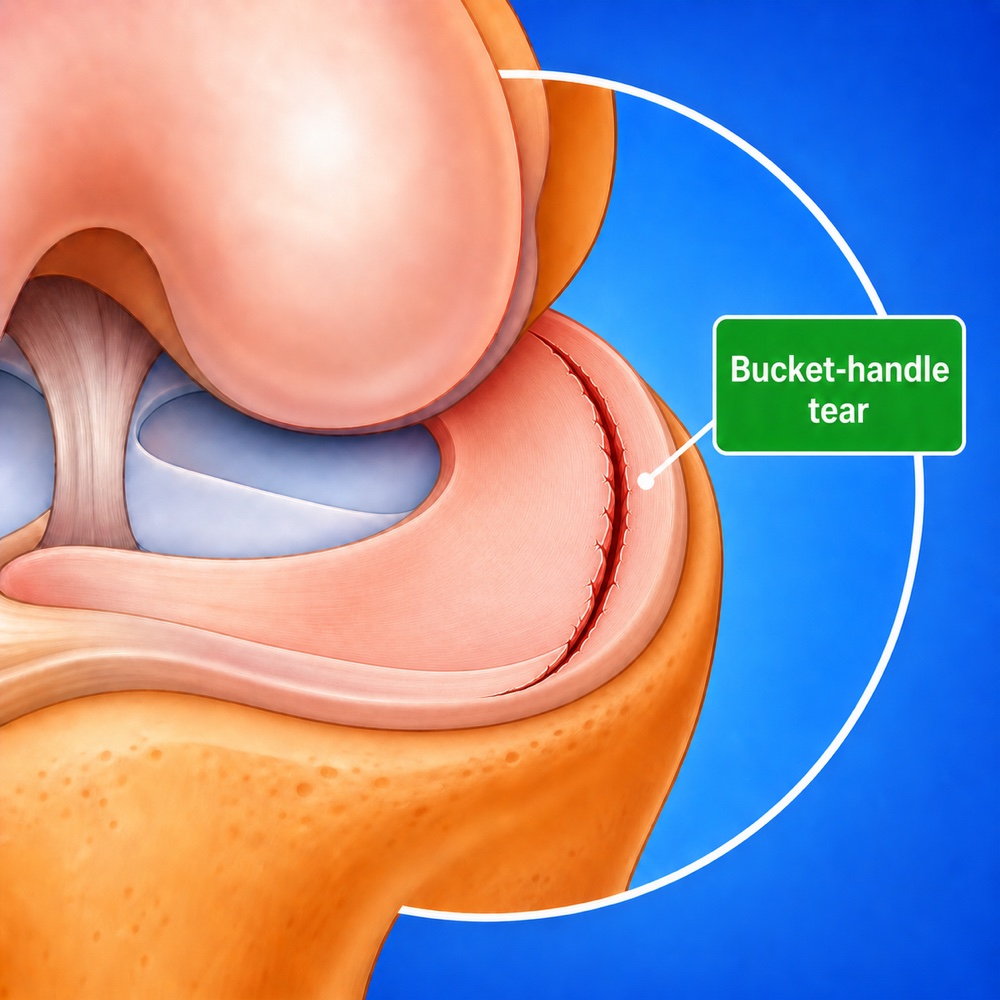
Bucket handle meniscal tear
Bucket-handle tear: a displaced longitudinal tear that can flip into the joint and cause true locking or loss of full extension.
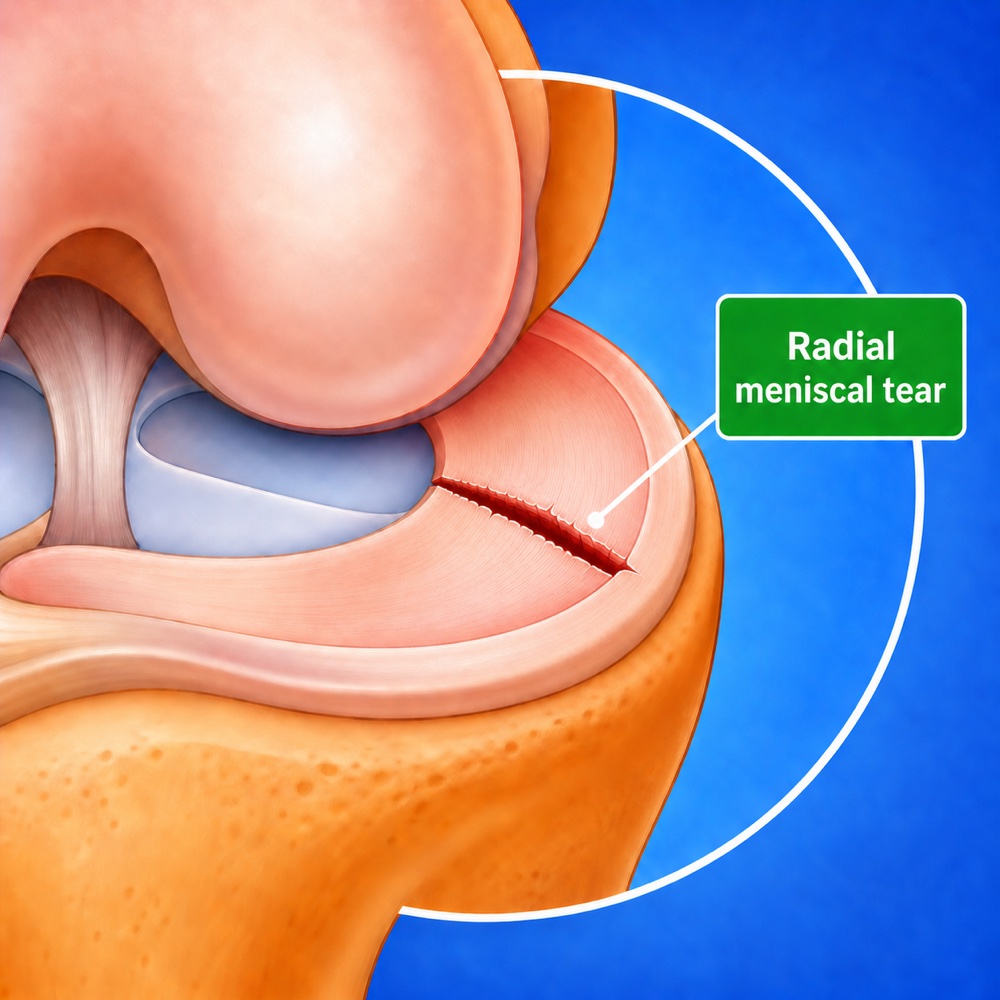
Radial meniscal tear
Radial tear: a tear extending from the free inner edge outward. Larger radial tears can impair the hoop-stress function of the meniscus.
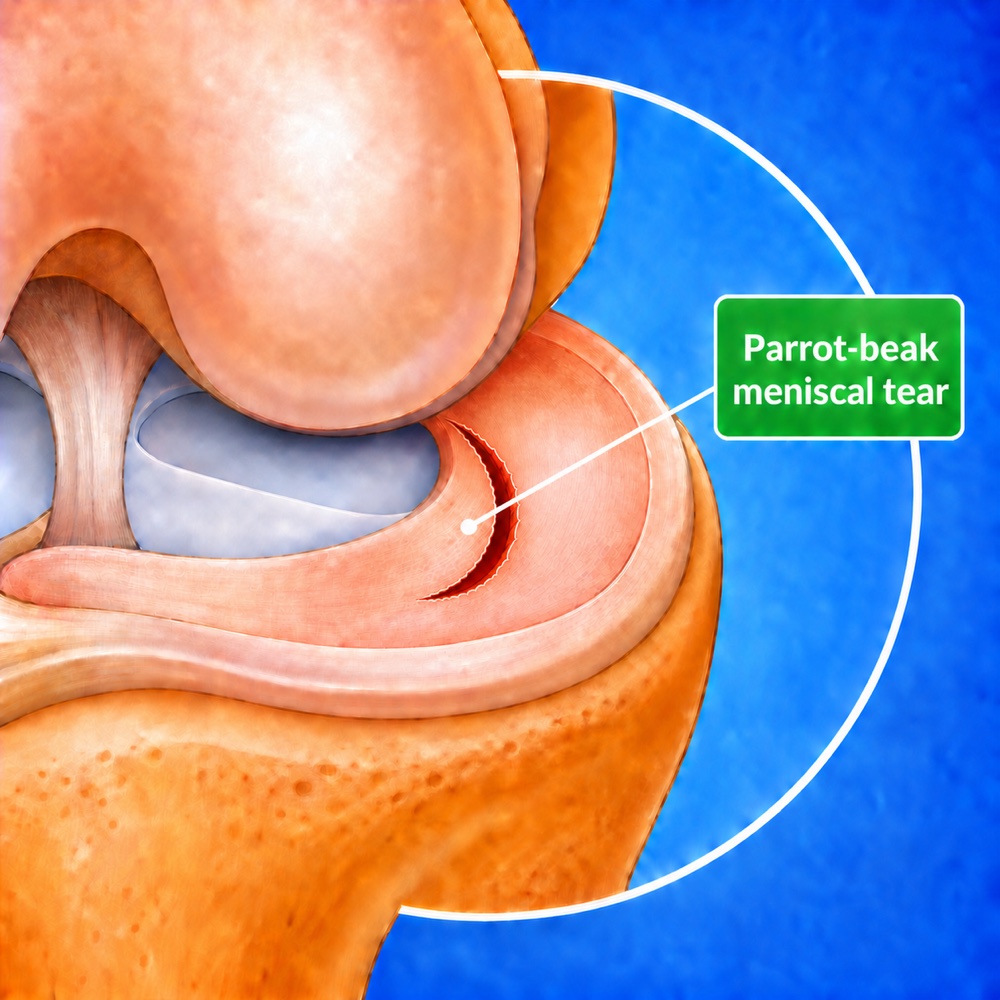
Parrot-beak meniscal tear
Parrot-beak tear: an oblique unstable tear pattern that may create a mobile fragment, causing catching or sharp intermittent pain with knee motion.
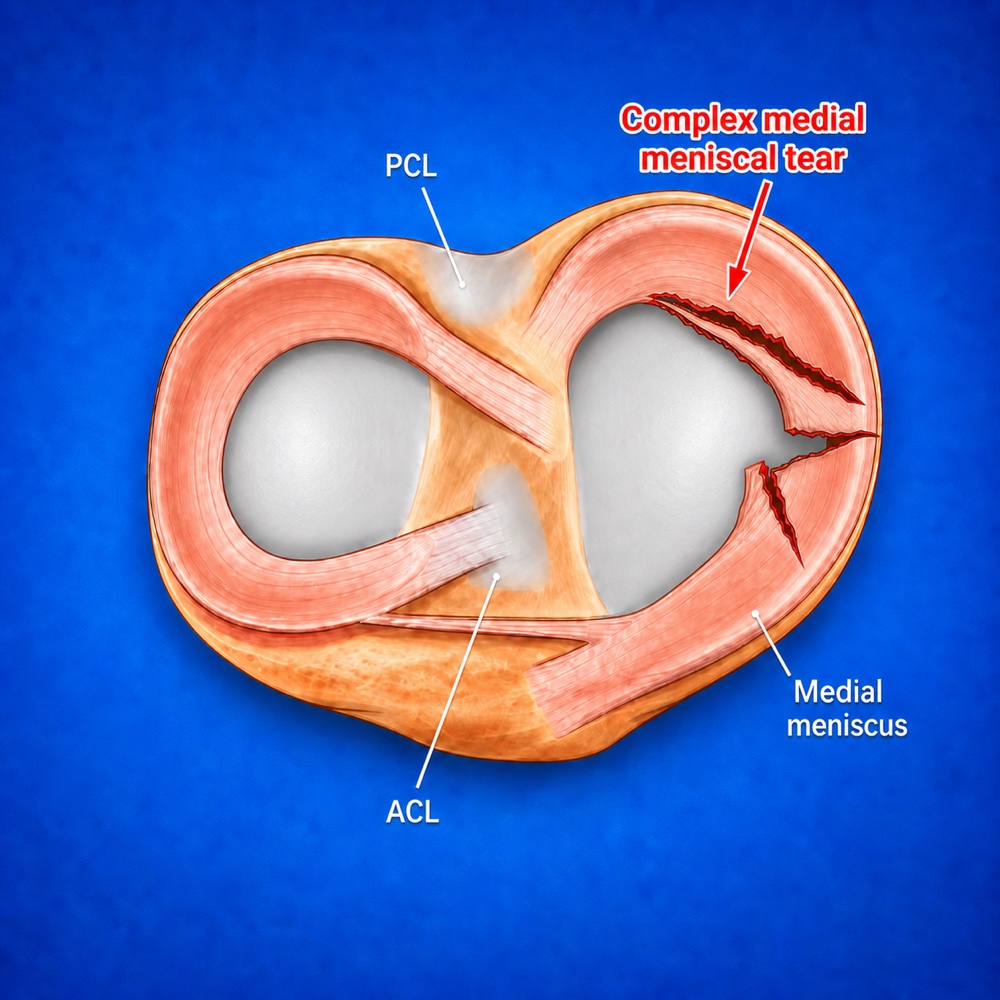
Complex meniscal tear
Complex tear: a combination of tear planes, commonly seen with degenerative meniscal tissue.
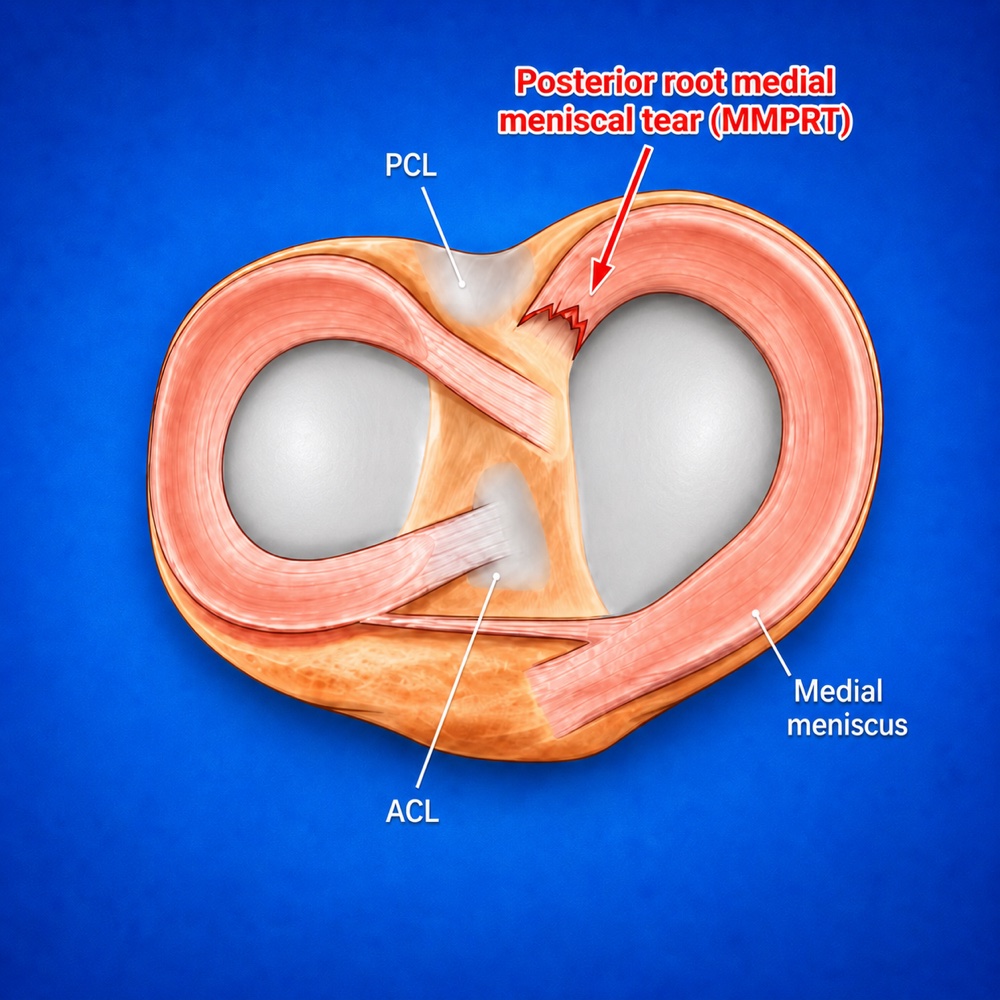
Meniscal root tear
Root tear: detachment near the meniscal bony attachment. This can substantially reduce meniscal function and requires careful assessment.